

What is a Climate Model?
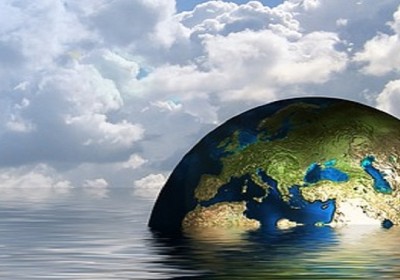
A key way of understanding our climate and making projections about how it may change in the future is to use climate models.
These are essentially simulations of the Earth’s climate system. They are made up of millions of lines of computer code which represent the physical processes which govern our atmosphere and oceans.
Supercomputers then run the code using observations of modern day climate, with the models able to recreate the past or give projections of the future.
Looking at the past is important for understanding historical changes and influences on climate, and it also allows scientists to gauge how accurate the models are.
Looking at the future enables researchers to see how things might change given various different scenarios – such as changing levels of greenhouse gases.
All models have limits – uncertainties – for they are modelling complex systems. However, all models improve over time, and with increasing sources of real-world information such as satellites, the output of climate models can be constantly refined to increase their power and usefulness.
Global climate models are used to understand the current climate, especially those processes that create a particular climate in each place. To become confident that a model correctly represents everything that shapes climate, scientists test models to see if they can accurately depict the current climate or recent historical climates on Earth. In this way, developers can improve the computer code that represents important physical processes that shape climate in any region.



 Total views : 238781