

Frozen Regions & Global Warming
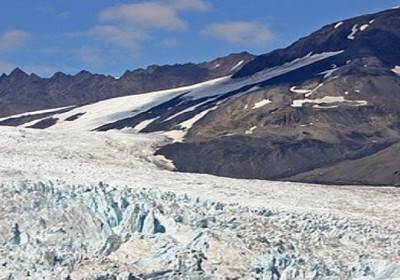
When glaciers retreat, as many have done since 1850, it can affect the availability of fresh water for irrigation and domestic use. It can also affect animal and plants that depend on melt-water from glaciers as the balance of glaciers and the surrounding environment can drastically affect ecosystems. In the longer term it can cause ocean levels to rise.
The increasing rate at which glaciers are retreating is one indication of how global warming is already affecting the planet.
Glaciers are hard to study – they are high, cold and in dangerous terrain. Scientists from the University of Alaska and the US Geological Survey analysed studies of 116 glaciers in the Alaska region over a 19-year-period to estimate the rate at which ice melted and icebergs calved.
They used airborne lidar, remote sensing technology and other techniques, historical data and a global glacier inventory to establish a kind of taxonomy of glacier change.
- The Columbia Glacier in Prince William Sound had retreated more than 19 kilometres because of iceberg calving and had thinned by 450 meters in height since 1980.
- After existing for many millennia, the northern section of the Larsen B ice shelf in Antarctica, a section larger than the state of Rhode Island, collapsed between January and March 2002, disintegrating at a rate that astonished scientists. Since 1995, the ice shelf’s area has shrunk by 40 percent.
- According to NASA, the polar ice cap is now melting at the alarming rate of nine percent per decade. Arctic ice thickness has decreased 40 percent since the 1960s.
Not all the glaciers have been on the retreat. Between 1909 and 2000 Harvard Glacier had advanced 0.78 miles (1.25km).


 Total views : 238885