

Aluminium Can Recycling
Recycling is an important part of a sustainable lifestyle. It is important for the future of the planet that we make the best use of limited natural resources.
Apparently five billion aluminium drink cans are sold in the UK every year and each one could be recycled over and over again, saving energy and raw materials.
Why is recycling aluminium important?
- Making aluminium from raw materials is a complex process. Once it is made the metal can be melted down and reformed without losing any quality. And the process can be repeated over and over again.
- As well as energy savings, recycling aluminium saves around 95% of the greenhouse gas emissions compared to the ‘primary’ production process. Recycling 1 tonne of aluminium saves 9 tonnes of CO2 emissions; So when you consider that 1 tonne of CO2 is equivalent to driving 2800 miles the benefits of recycling really start to become compelling.
- The drinks can you recycle today could be made into a new can, filled and put back on the shelf in just six weeks. In a whole year, that one can could be recycled eight times, saving enough energy to make 160 new cans.
- Over 90% of the drinks cans sold in the UK are made of aluminium, and when you add all the aerosols and foil food trays, that adds up to over 160,000 tonnes of aluminium packaging that could be recycled. The current recycling rate for drinks cans stands at 60% (2011 figures), and the overall rate for aluminium packaging is 45%.
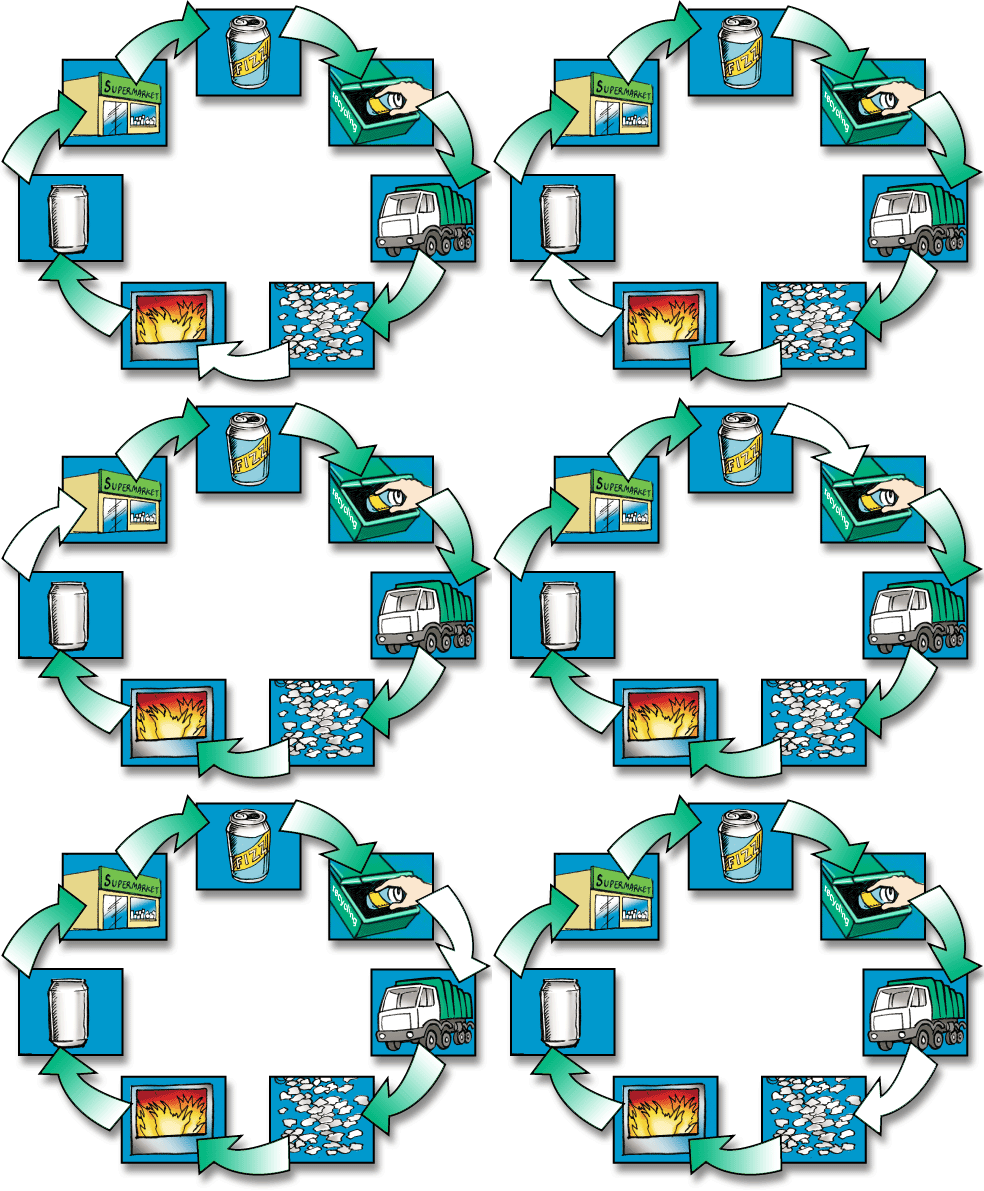
How aluminium is recycled
- The consumer throws aluminium cans and foil into a recycle bin.
- The aluminium is then collected and taken to a treatment plant.
- In the treatment plant the aluminium is sorted and cleaned ready for reprocessing.
- It then goes through a re-melt process and turns into molten aluminium, this removes the coatings and inks that may be present on the aluminium.
- The aluminium is then made into large blocks called ingots. Each ingot contains about 1.6 million drinks cans.
- The ingots are sent to mills where they are rolled out, this gives the aluminium greater flexibility and strength.
- This is then made into aluminium products such as cans, chocolate wrapping and ready meal packaging.
- In as little as 6 weeks, the recycled aluminium products are then sent back to the shops ready to be used again.


 Total views : 238885